- Duration
- 2 hours
- Season
- December 1 to April 30
- Ages
- 2 and up
- Group size
- Up to 20 guests
- Check-in
- Kaanapali Beach, behind Whalers Village (2435 Kaanapali Pkwy)
- Best time
- Early morning, January through March
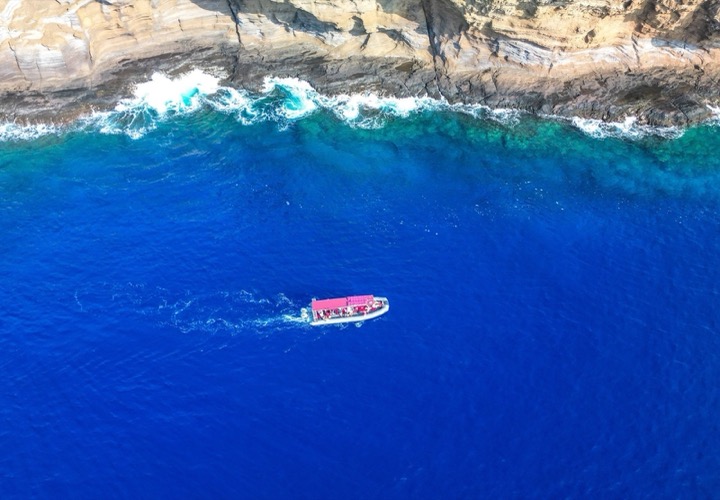
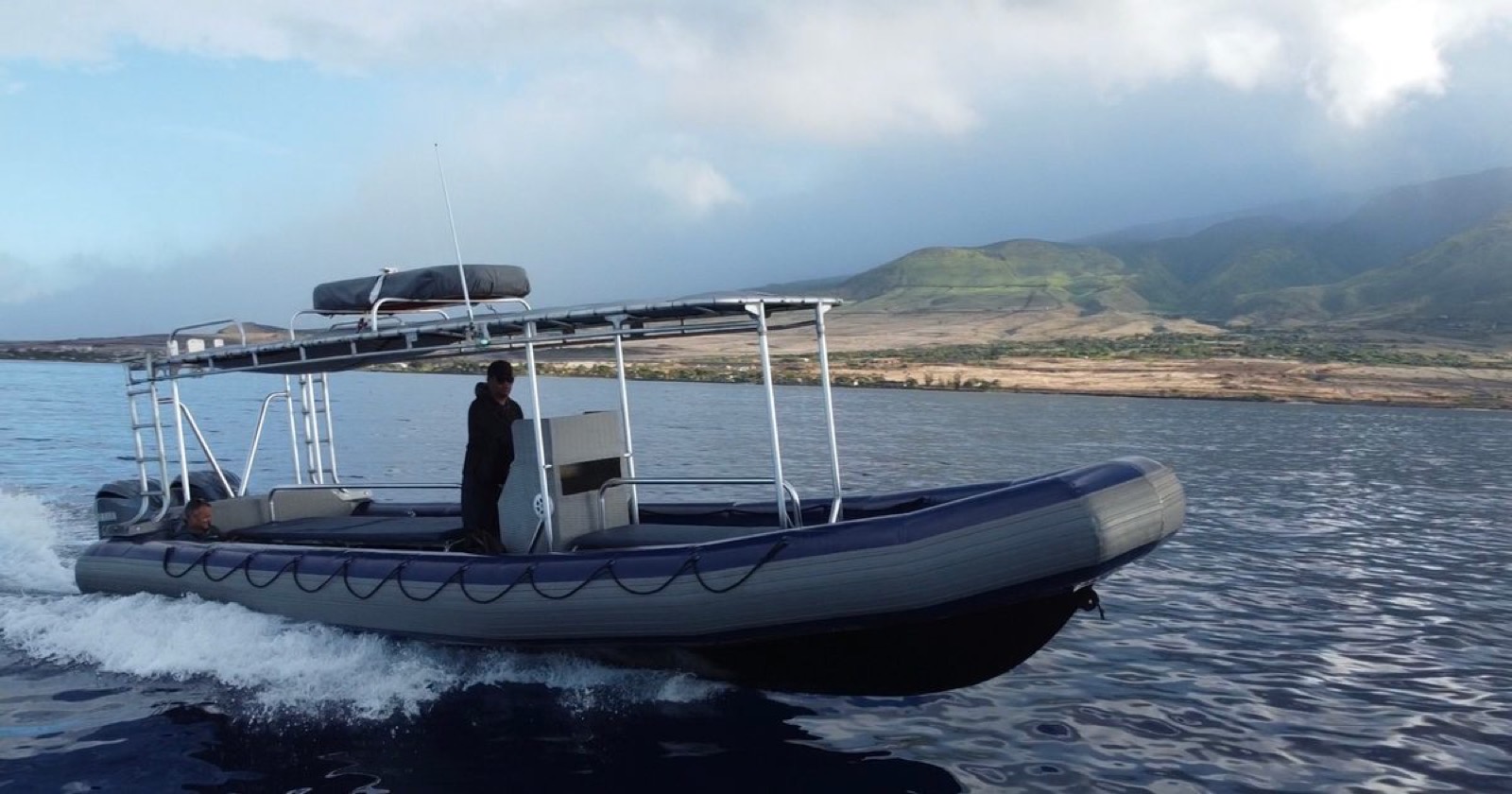
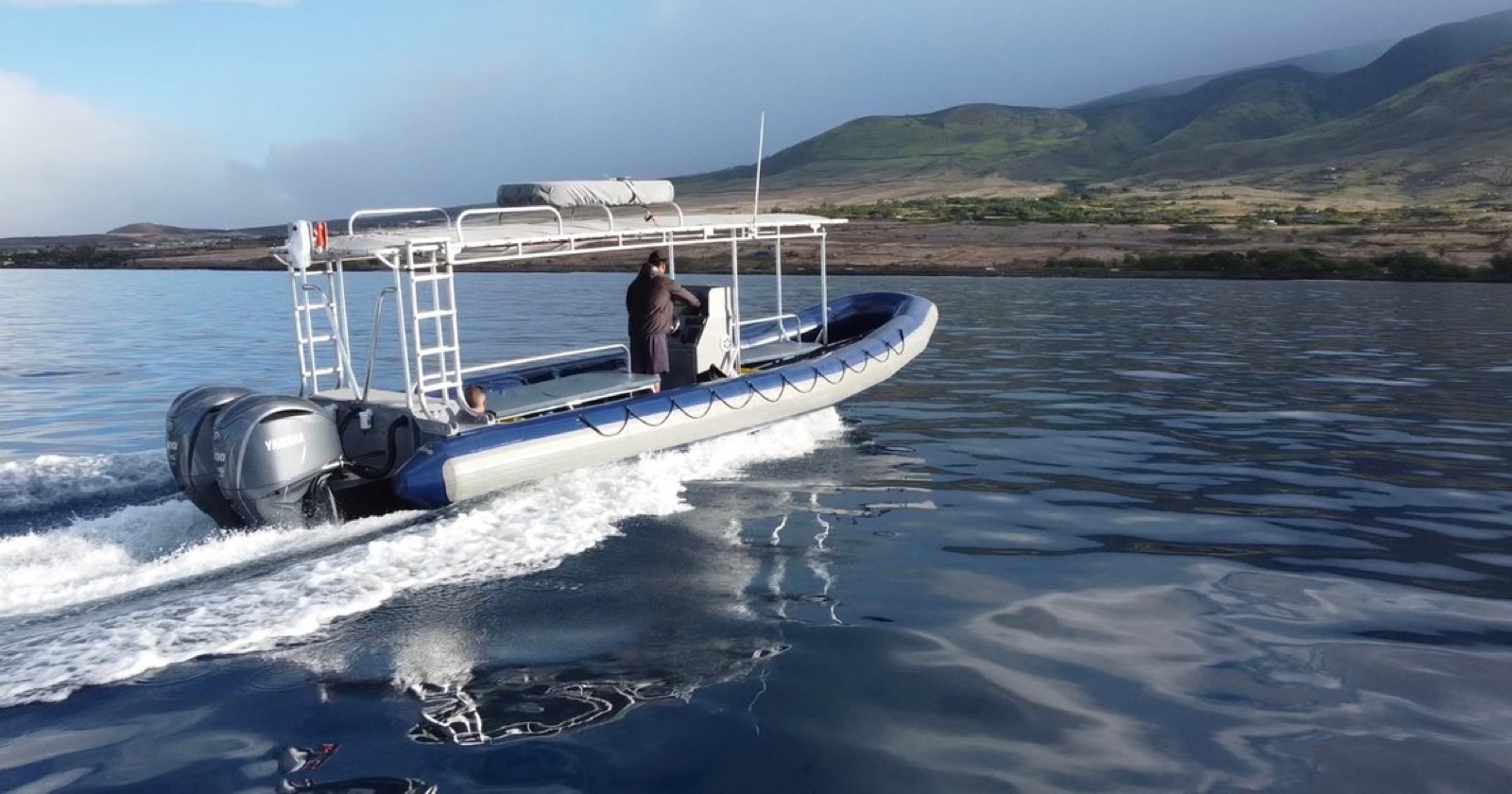
- Small raft, 20 guests maximum, so you sit at water level with room to move
- A certified marine naturalist and the captain on every trip
- Hydrophone played through the stereo so you hear live whale song
- Whale-sighting guarantee: the next trip is free until you see whales
- Full overhead shade, boarding by shuttle boat straight off the sand
- First trip leaves at 7:00 am, when the channel is usually flattest
Every winter more than 10,000 humpbacks cross the Pacific to the warm channel off West Maui, and the best seat for Maui whale watching is a small raft that leaves from the sand at Kaanapali Beach. This one carries 20 guests, a captain and a certified marine naturalist, and it comes with a sighting guarantee.
Why this made our list
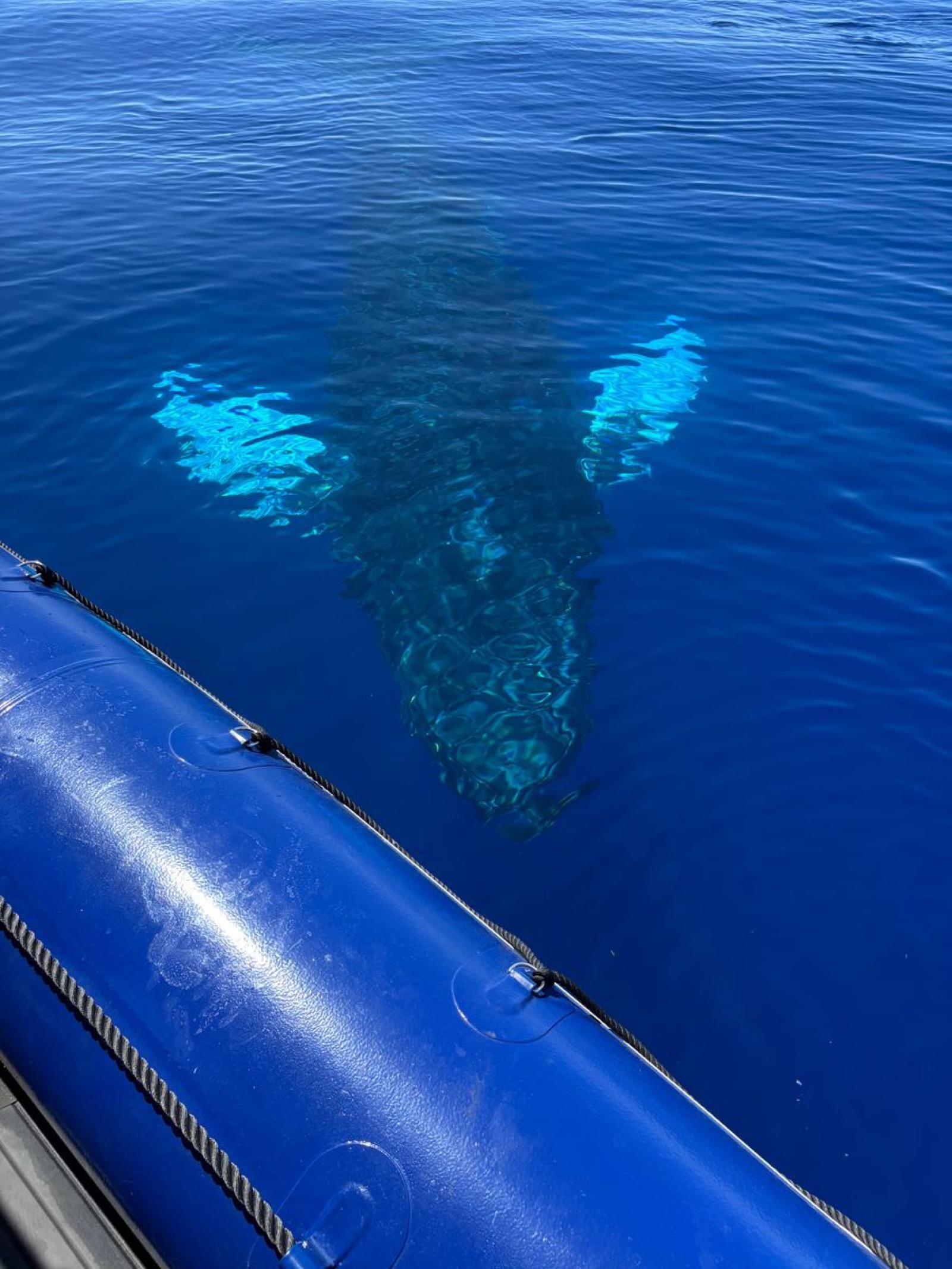
Most whale watching Maui visitors book is a big catamaran, and those trips do show you whales. The difference on this one is how it feels. A custom twin-engine raft sits low, so you are level with the animal instead of looking down on it, and with 20 guests aboard you can walk to whichever side a whale just surfaced on.
The location helps too. The whale ground in the Auau Channel starts a few hundred yards off Kaanapali Beach, so this Kaanapali whale watch reaches the whales within minutes of leaving the sand rather than after a long run from a harbor. For a two-hour trip, that is a lot more time spent actually watching.
A few more reasons it earned a spot:
- The crew. Two of the captains rank in the top 10 worldwide on the Happywhale photo-ID leaderboard. Many of the crew work Maui in winter and spend summer running whale trips in Alaska, so they follow the same whales at both ends of the migration.
- The naturalist. Every trip carries a certified marine naturalist who narrates what you are seeing, which turns the morning into something closer to a field course.
- The hydrophone. A microphone in the water plays live whale song through the boat’s stereo.
- The guarantee. If you do not see whales, your next trip is free until you do.
- The reviews. The operator holds 4.9 stars from about 250 reviews across Google and Tripadvisor.
How it compares to the other Maui whale watches
West Maui has no shortage of whale watches. Pacific Whale Foundation and Sea Maui run big-boat trips with 50 to 100-plus guests, and Ultimate Whale Watch and Redline Rafting run rafts out of Lahaina and Kihei. We compared them on boat size, how close you sit to the water, what the crew brings, and reviews, and chose Maui Whale Adventures: a 20-person raft that loads right off Kaanapali Beach, a marine naturalist and a hydrophone on every trip, a sighting guarantee, two captains ranked in the top ten worldwide on Happywhale, and a 4.9 rating.
What the experience is like on a Maui whale watching raft
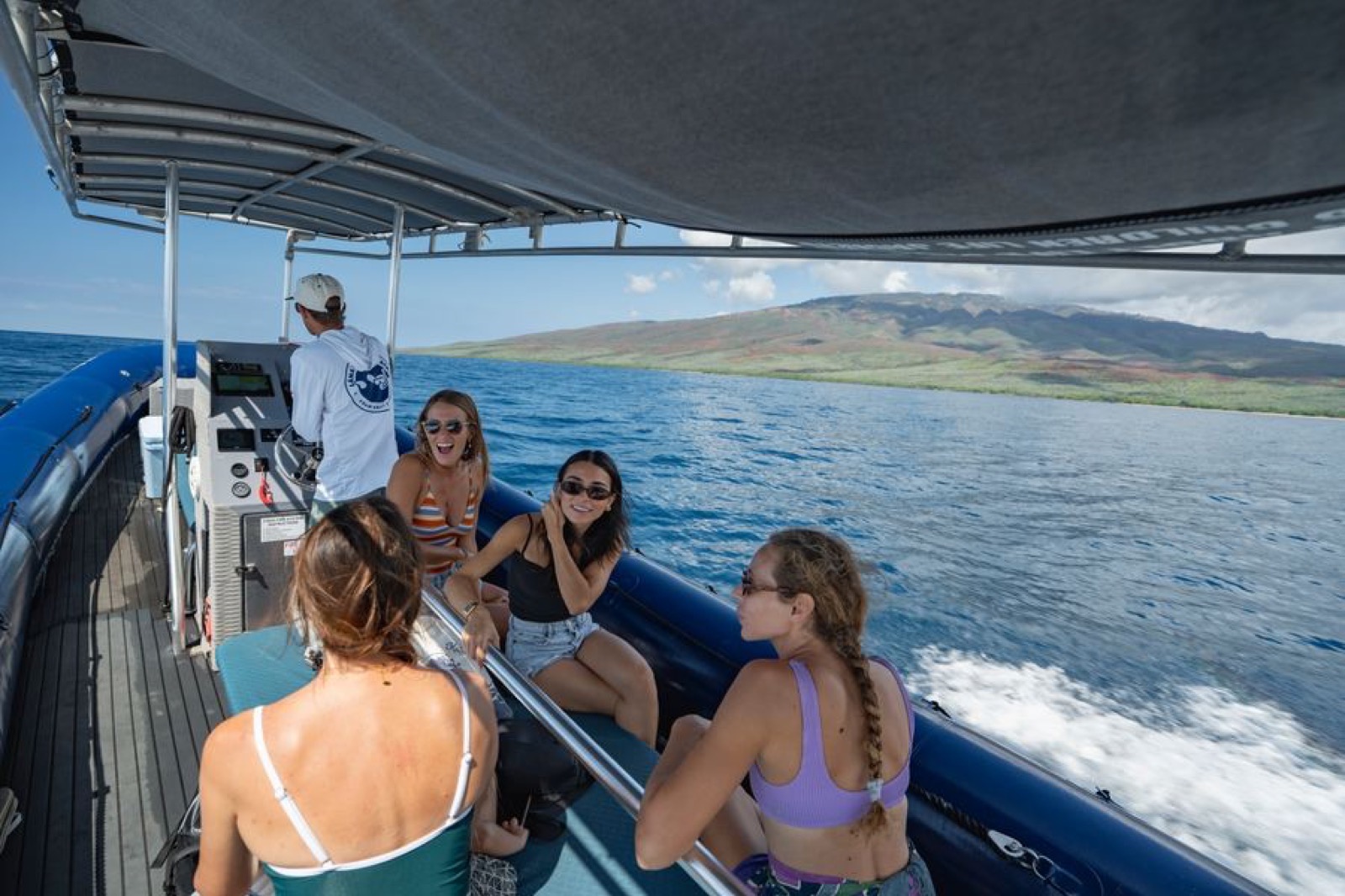
The first trip leaves at 7:00 am, and the morning goes like this. You check in on the beach behind Whalers Village, where the crew finds you on the sand and the whole process takes a couple of minutes. A shuttle boat then runs you out to the raft, so there is no wading and no surf to climb through. After a short safety briefing the raft heads out.
The transit is short. Once you are in the channel, the captain works the boat toward whatever is happening, and the naturalist explains it as it unfolds. The raft is fast and repositions easily when whales move. Full overhead shade keeps the sun off, and a dry bag on board holds phones and cameras if the spray picks up.
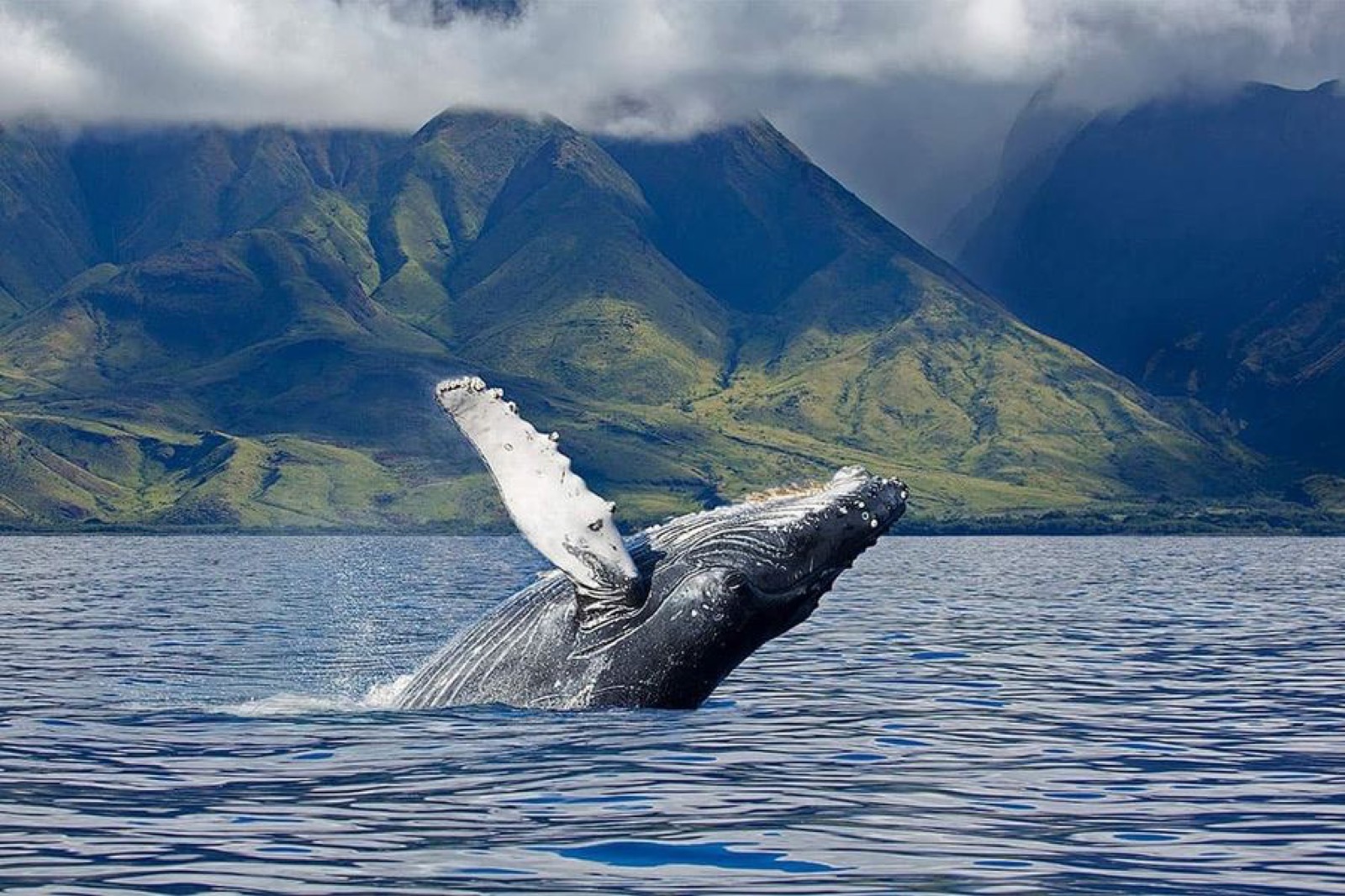
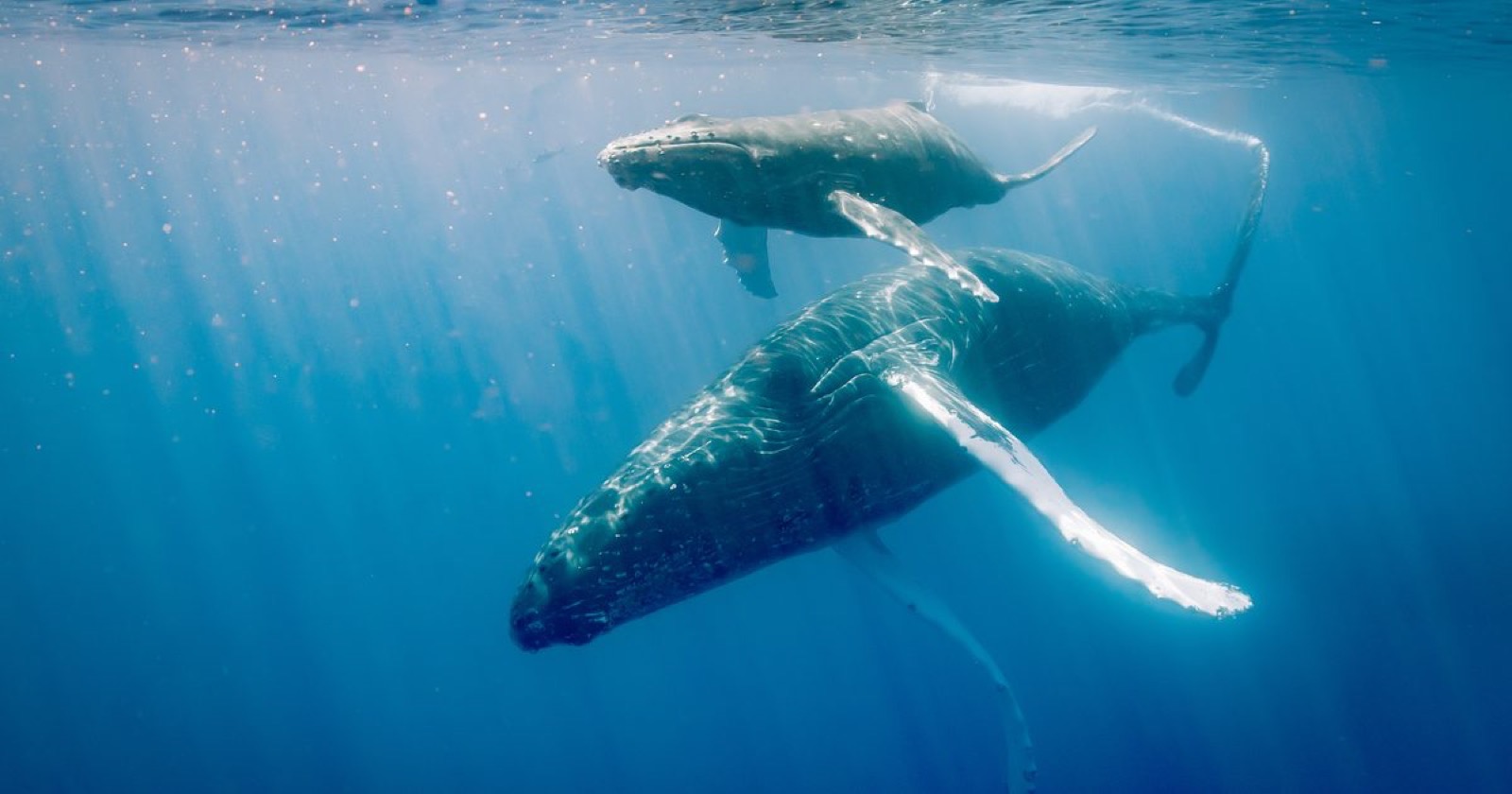
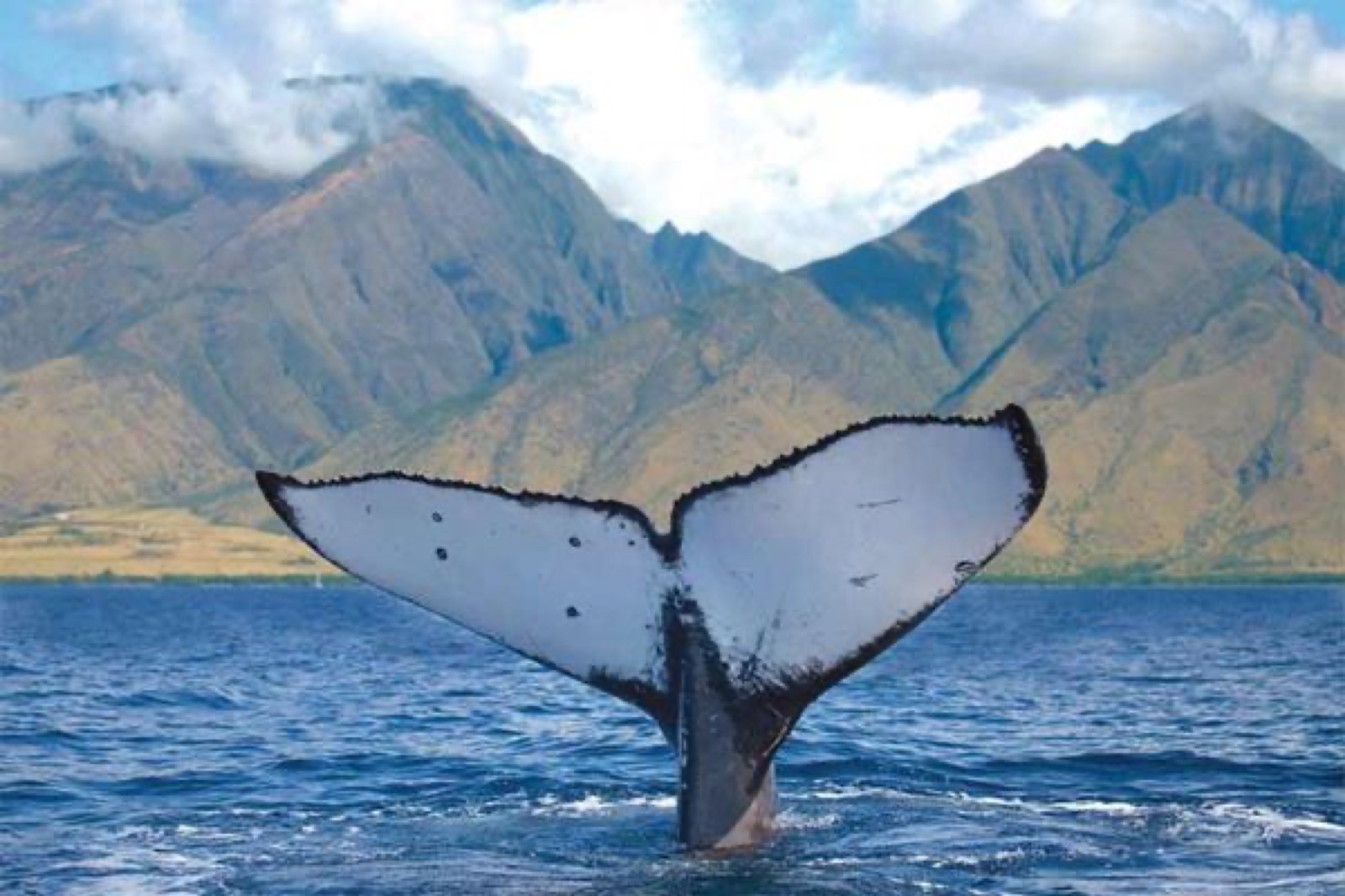
What you see depends on the day. Reviewers describe many whales within the first half hour, sometimes with dolphins alongside. Common sights are spouts, tail lifts, pectoral fin slaps and the occasional full breach. From March especially, mother and calf pairs stay close to shore in the calm morning water.
The hydrophone is the part people remember. In January, February and March the water is full of song, and hearing it while a whale surfaces nearby changes the whole feel of the trip. You return to the same sand you left from, with the day still ahead of you.
One honest note: the ride is livelier than on a large catamaran. That is the trade you make for the size and the speed. Most guests find it part of the fun, but it is worth knowing before you book.
Humpback whale facts worth knowing before you go
Your naturalist will cover this in more detail on the water, but a few facts make everything you see more interesting.
- They come from Alaska. The migration is roughly 3,000 miles, takes four to eight weeks of near-continuous swimming, and happens twice a year.
- Maui is a nursery. The humpbacks are here to breed and give birth, not to eat. The Auau Channel is warm, rarely deeper than about 300 feet, and sheltered on three sides by high islands that block the trade winds.
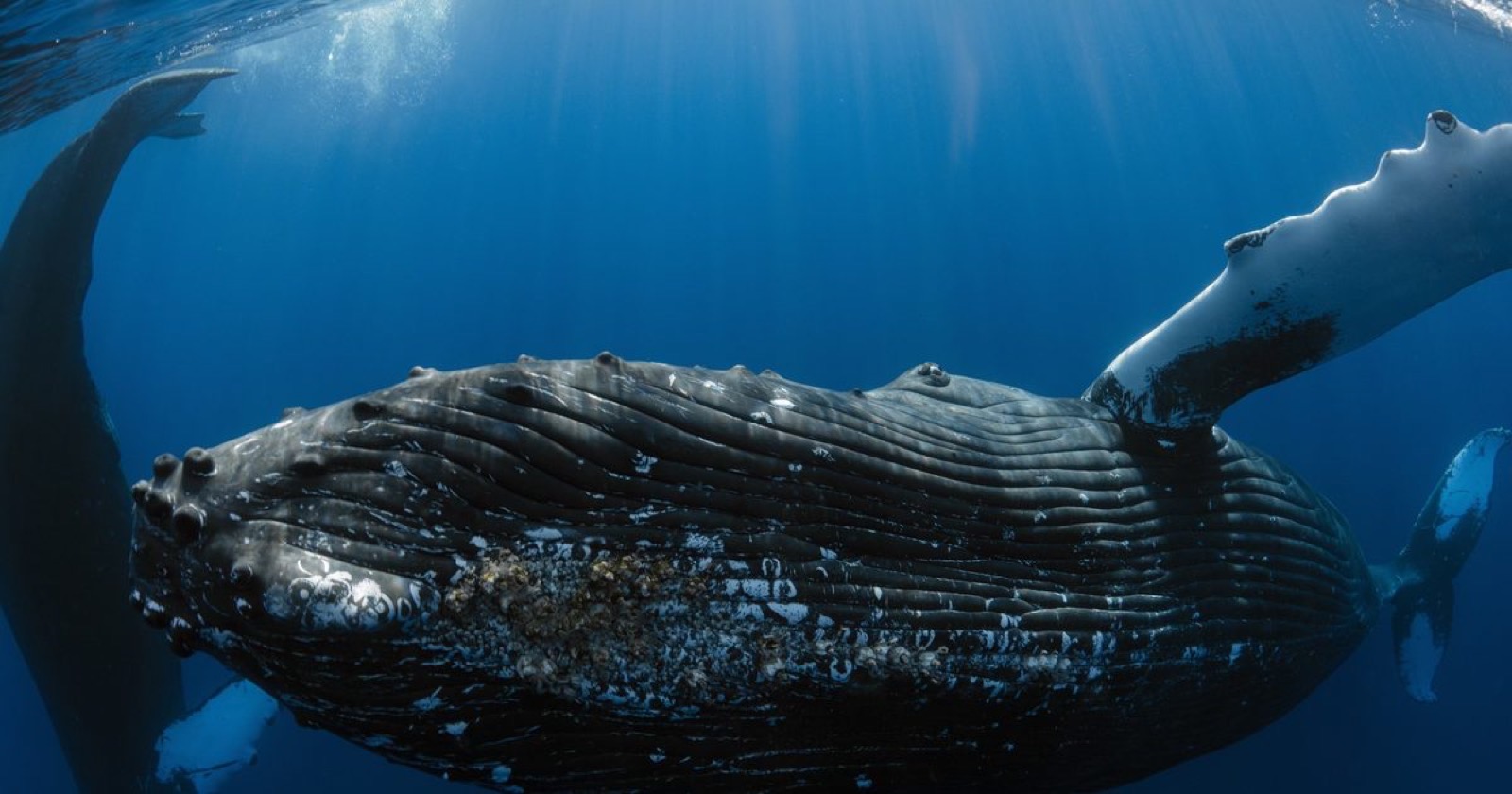
- The calves are big from day one. A newborn is 10 to 15 feet long and weighs a ton or more. It gains about 100 pounds a day on milk that is roughly half fat.
- Adults are about 45 feet long. That is longer than the raft you are sitting in.
- Only the males sing. A song lasts 10 to 20 minutes and repeats for hours, and every male in the North Pacific sings the same version, revised season by season. The hydrophone is how you hear it.
- Every fluke is unique. Researchers identify individual whales by their tail patterns, which is the same photo-ID work behind the Happywhale leaderboard.
Boats keep a 100-yard minimum distance under federal rules, cut their engines when whales approach, and give mothers and calves extra room. There is no swimming with the whales.
Prices and what you get
Maui whale watching tours on this raft start at $79 per guest, plus tax and booking fees. The rate moves with the date and the season, and the booking calendar shows the exact price for the day you pick. That covers two hours on the water with a naturalist, a hydrophone and a guarantee.
What is included:
- A two-hour guided whale watching trip with a captain and certified marine naturalist
- Live hydrophone audio through the stereo
- Life jackets and safety equipment for everyone
- Shuttle boat boarding from the beach
- Dry bag storage for phones, cameras and small items
- The whale-sighting guarantee
What is not included: water, snacks and drinks, tax and booking fees, and parking. Bring your own water and snacks. Alcohol is not allowed on board.
If you want the raft to yourselves, private charters start at $1,350 per boat for the same two hours from Kaanapali Beach, with up to 20 guests. The break-even is about 17 guests, so it makes the most sense for families, birthdays, anniversaries and memorials. A party of eight, for example, pays about $169 each on a private trip against $79 each on the public one. A private sunset charter also runs from Mala Boat Ramp in Lahaina, which is a good pick for photographers and special occasions.
The guarantee covers humpbacks, not dolphins, and applies on public and private trips alike from December 1.
Who it’s for (and who should skip it)
This trip suits most visitors. Families with kids who like being low and close to the water do well, since the trip is only two hours and the minimum age is 2. Couples, photographers and first-time Maui visitors tend to love it, and so do people who care about the animals and want a naturalist doing the talking.
It is also a good fit if you dislike big crowded boats, since a 20-person raft means no queue at the rail.
Some guests should skip it. The raft moves over chop, and that sends repeated hard impacts through the seat, so the operator does not allow:
- Guests who are pregnant, at any stage
- Guests with back or neck problems
The boat is not wheelchair accessible, so call before booking if you are unsure. With no restroom on board, travelers who need one, or who want a steadier ride, should look at a large catamaran instead.
Seasickness is possible. Take the earliest departure, when the channel is calmest. Take motion medicine before you board, because it works far better ahead of time. Keep your eyes on the horizon rather than on your phone, and tell the crew if you start to feel unwell. Moving toward the back of the boat usually helps.
Where to check in and how to get there
The public whale watch meets on Kaanapali Beach, behind Whalers Village at 2435 Kaanapali Pkwy. There is no terminal and no dock. The crew finds you on the sand, checks you in in a couple of minutes, and sends you out by shuttle boat.
If you are not staying on the beach, park in the Whalers Village parking structure, a short walk from the sand. Parking is not validated, so budget for it, and give yourself extra time at peak hours, especially for the 7:00 am departure. Whalers Village is also the place to use a restroom before you check in. Kaanapali is about ten minutes north of Lahaina on the Honoapiilani Highway.
Staying in Lahaina, Kaanapali or Kapalua puts you close. For where to base yourself, see our guide to Maui’s regions.
The season calendar, the raft details and the operator’s own FAQ are at mauiwhaleadventures.com, including the current first-departure time, which shifts a little through the season.
Best time to go
Whale season Maui visitors plan around runs from December 1 to April 30. The first whales arrive in late October and November, activity builds through December, and the peak is January through March, with the densest stretch from late January to mid-March. April tapers off as males and juveniles head north first, while mothers with new calves linger longest. For the full month-by-month picture, read our Maui whale season guide.
Time of day matters almost as much as the month. The channel is usually flattest early, before the trade winds build through the late morning and afternoon, and flat water makes a spout far easier to spot at a distance. That is why the 7:00 am trip is the one to book. Later trips have better light, but the whales do not leave at lunchtime, so you will see them either way.
If you can choose, aim for a morning trip in February or March. If you cannot, any trip inside the season is a whale trip.
Local tips before you book
- Book early for the peak. January, February and March fill first, and within those months the mornings go before the afternoons. If you are set on a date, book it before you arrive.
- Check the live calendar. Times other than the 7:00 am trip vary through the season.
- Dress in layers. It can be breezy on the water. A light jacket, a hat that stays on and mineral sunscreen help.
- Protect your phone. Bring a waterproof case and use the dry bag.
- Use the bathroom first. There is no restroom on the boat.
- Weather is the captain’s call. If conditions are unsafe, you can reschedule or take a full refund.
- Plan your other days. See our guide to the best things to do in Maui.
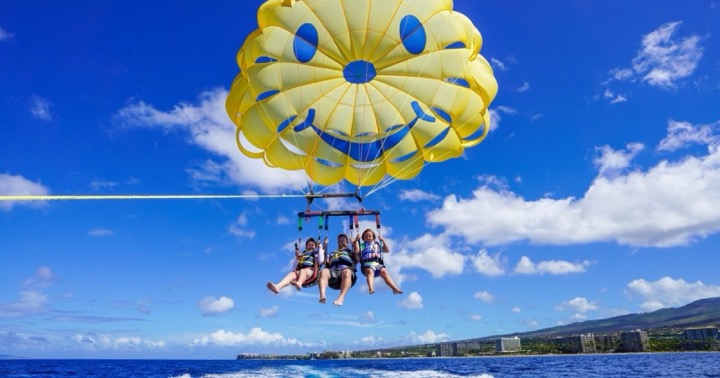
- Come back outside the season. Kaanapali Beach Parasail runs from the same beach the rest of the year, so Maui parasailing is the natural pairing if your trip falls outside December to April.
You can also spot whales from shore. The paved Kaanapali Beach Walk, the headland at Puu Kekaa (Black Rock) and the Kapalua Coastal Trail all look out over the same channel. Go early, bring binoculars, and look for the spout first.
The verdict
This is the Maui whale watching trip to book if you want to be close to the water and close to the whales. The small raft, the naturalist, the hydrophone and the beach departure add up to a better trip than a crowded big-boat run, and the sighting guarantee takes most of the risk out of it. It is the right choice for humpback whales Maui visitors who want substance as well as sightings.
The tradeoffs are real. The ride is livelier than a catamaran, there is no restroom, and pregnant guests and anyone with back or neck trouble cannot go. If none of those apply, book the 7:00 am departure for the calmest water, aim for February or March if you can, and take the free return trip as the safety net it is meant to be.
Photos
Know before you go
What's included
- 2-hour guided humpback whale watching trip
- Captain plus a certified marine naturalist
- Live hydrophone audio through the boat's stereo
- Life jackets, safety equipment and a safety briefing
- Shuttle boat boarding from the beach
- Dry bag storage for phones, cameras and small items
- Whale-sighting guarantee
Not included
- Water, snacks or drinks
- Parking (the Whalers Village structure is not validated)
- Tax and booking fees
- A restroom (there is none on the boat)
What to bring
- Sunglasses and a hat that stays on
- Water bottle and snacks
- Camera or phone, ideally in a waterproof case
- Reef-safe mineral sunscreen (Maui County allows only mineral formulas)
- A light jacket or long-sleeve layer
- Motion sickness medicine, taken before you board, if you use it
Restrictions
- Ages 2 and up; children must keep a life jacket on and stay seated while the boat moves
- Not suitable during pregnancy, at any stage
- Not suitable for guests with back or neck problems
- Not wheelchair accessible
- No alcohol on board
Frequently asked questions
When is whale season on Maui?
Humpback season runs December 1 to April 30, with the busiest stretch in January, February and March. Maui Whale Adventures does not run whale watching trips in November.
Will we actually see whales?
During the season, sightings are guaranteed. If you do not see a whale on your trip, the next trip is free, and you can come back until you do.
How much does the whale watch cost?
Public trips start at $79 per guest plus tax and booking fees, and the rate moves with the date and season. Private charters from Kaanapali start at $1,350 per boat.
What time do the trips leave?
The first trip leaves at 7:00 am. Other departure times vary through the season, so the live calendar in the booking window is the one to trust.
Where do I check in and park?
Check in on Kaanapali Beach behind Whalers Village, where the crew finds you on the sand. Park in the Whalers Village structure, which is a short walk away and not validated.
Is the raft bumpy, and what about seasickness?
A raft is livelier than a large catamaran, and some guests do get queasy. Take the earliest trip, take motion medicine before you board, keep your eyes on the horizon and tell the crew if you start to feel unwell.
Can kids come along?
Yes, from age 2. The deciding factor is usually whether a child will keep a life jacket on and stay seated while the boat is moving.
Who should not book this trip?
Pregnant guests and anyone with back or neck problems should not book, because the raft can deliver repeated jolts through the seat. The boat is also not wheelchair accessible.
Is there a restroom on board?
No. Use the facilities at Whalers Village before you check in.
What happens if the weather is bad?
If conditions are not safe, the captain does not go out. You can reschedule onto another departure or take a full refund.
Can I book the whole boat?
Yes. A private charter from Kaanapali Beach runs the same 2 hours with only your group aboard, up to 20 guests. It costs the same per head as a public seat at around 17 guests.
Maui Whale Adventures vs Pacific Whale Foundation vs Ultimate Whale Watch: which is best?
Pacific Whale Foundation runs large boats with naturalists from the harbors. Ultimate Whale Watch and Maui Whale Adventures run small rafts that sit at water level. We chose Maui Whale Adventures for the 20-person raft loading off Kaanapali Beach, the naturalist and hydrophone on every trip, the sighting guarantee and its 4.9 rating.
Ready to go?
Book Maui Whale Adventures
Prices from $79 plus tax and fees. Popular dates sell out a week or more ahead in peak season.
Last updated October 27, 2026 · Written by West Maui locals with 25 years in Maui water sports. How we make money.