Kihei · South Maui
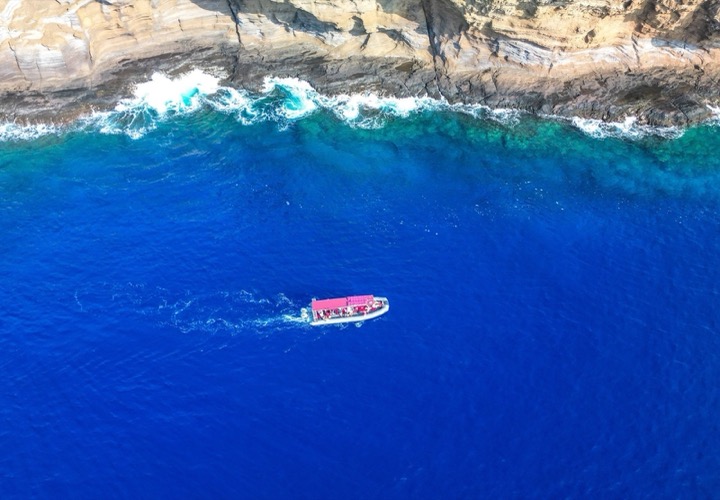
Molokini Snorkeling Raft Tour: 2 Hours Inside Maui's Famous Crater
A 40-foot raft, a 10:30 am departure and over an hour of snorkeling inside Molokini Crater, from $129.
Maui has a dozen climates on one island. The live National Weather Service forecast below covers the three places visitors actually stand: the West Maui resort coast, the South Maui resort coast, and Hana. Underneath it is the month-by-month table, the microclimate map in words, and the honest answer to "when should we come?"
Live · NOAA National Weather Service
Loading the live forecast from the National Weather Service…
If it does not appear, the same forecasts are on weather.gov: Kaanapali, Kihei, Hana, the leeward waters marine forecast and the NWS Honolulu office.
Forecast points and the Maui County leeward waters zone, published by the National Weather Service in Honolulu and refreshed several times a day. Forecasts, not beach readings. Boat operators make their own call each morning on the water.
Rain falls where the wind hits the mountains. The trade winds blow from the northeast on about three days in four, pile up against the West Maui Mountains and Haleakala, and drop their moisture on the windward slopes: Hana, the Road to Hana, Iao Valley, the north shore. The resort coasts on the far side, Kaanapali, Lahaina, Kihei and Wailea, sit in the rain shadow and are among the driest places in Hawaii. Lahaina averages around 13 inches of rain a year. Hana averages more than 80. They are 55 miles apart.
So the forecast you want is the one for where you are standing, which is why the live block above shows three. An island-wide "60% chance of rain" is almost always a Hana and Upcountry number.
Typical values for the Lahaina–Kaanapali coast, rounded from NOAA climate normals. Kihei and Wailea run a degree or two warmer and drier; Hana is wetter in every month. Use the live forecast for the week you are here.
| Month | High / low | Ocean | Rain (leeward) | Wind and sea | What is on |
|---|---|---|---|---|---|
| January | 81° / 64° | 75° | 2.9 in | Fronts and Kona days between calm trade mornings; big surf on north shores | Whale season in full swing. Thrill craft paused. Peak prices. |
| February | 81° / 64° | 75° | 2.0 in | Fronts thin out; long settled spells; north swell continues | Peak whales. The best month for a whale watch. |
| March | 82° / 65° | 75° | 1.8 in | Trades re-establish; mornings calm, afternoons breezy | Whales still everywhere. Spring break crowds. |
| April | 83° / 66° | 76° | 0.8 in | Dry and settled; some of the calmest ocean of the year | Last whales. Snorkel sails resume mid month. Prices ease. |
| May | 85° / 68° | 77° | 0.4 in | Steady trades, calm mornings; south swell season begins | Parasail and jet ski reopen May 16. A sweet spot month. |
| June | 87° / 70° | 78° | 0.1 in | Driest month; reliable trades; hurricane season opens quietly | Everything running. Summer families arrive late month. |
| July | 88° / 71° | 79° | 0.2 in | Strongest trades of the year; book boats and flights for the morning | Busiest summer month. Book two weeks ahead. |
| August | 89° / 72° | 80° | 0.3 in | Hot, humid spells; trades ease late month; hurricane season peaks | Warmest water. Crowds fade after mid month. |
| September | 89° / 71° | 80° | 0.3 in | Lightest winds of the year; glassy mornings; warmest ocean | Locals' favourite month. Lowest prices with summer weather. |
| October | 87° / 70° | 79° | 0.9 in | Calm and warm; first hint of winter fronts late month | Quiet, excellent value. Everything still open. |
| November | 84° / 68° | 78° | 1.6 in | Variable; first Kona storms; north swells begin | Shoulder season until Thanksgiving. First whales arrive. |
| December | 82° / 66° | 76° | 2.6 in | Winter pattern: fronts, showers, calm spells between | Whale season opens Dec 1; thrill craft pause Dec 15. Holiday peak. |
Highs and lows are air temperature at Lahaina; ocean is the West Maui coastal mean. Daylight runs from about 7:00 am to 5:50 pm in December and 5:45 am to 7:10 pm in June. Maui does not change its clocks.
December 1 to April 30
Peak numbers January through March, with February the surest. Mornings are calmest; blows show on flat water and vanish in whitecaps. Rain does not matter; wind does. See the whale season guide.
April – May and September – October
Lighter trades, little swell, warm water. Molokini and the Lanai coast are at their clearest, parasail and jet ski days rarely blow out, and the island is quieter.
Late April – early June, September – mid December
Resort rates drop, boats have space, and the weather is as good as or better than the peak months. September is the locals' pick.
November – March north shores; May – September south shores
Winter north swells light up Honolua Bay and Hookipa while Kaanapali stays swimmable. Summer south swells reach Lahaina and Kihei, usually small and friendly.
The default. Northeast, 10 to 25 mph, strongest in summer and in the afternoon. They keep the islands comfortable at 85 °F and they are why mornings are the time to be on the water: the leeward coasts wake up calm and the wind fills in after lunch. If a tour has a 7 am and a 1 pm departure, the 7 am is the smoother one almost every day of the year.
A few days a month from October to April, a passing front swings the wind round to the south or southwest. The sheltered coasts become the exposed ones, the rain and haze come to the resort side, and the sea gets short and lumpy. Kona days are when boats are most likely to cancel and the Road to Hana is at its sunniest. They usually clear in a day or two. Vog, the volcanic haze from the Big Island, also drifts over on Kona winds and can make the horizon milky.
June 1 to November 30, peaking in August and September. Direct hits are rare; most systems weaken or pass south and deliver a few days of humidity, showers and surf. Storms are tracked a week out, so there is never a surprise. If a watch or warning is posted for Maui County it appears at the top of the live forecast above.
The best time to visit Maui guide goes deeper on prices and crowds by month, and the island map shows which adventures leave from which coast.
April, May, September and October: warm, dry, lighter winds and calmer seas than midsummer, with fewer visitors and lower prices than winter or July. Every month is warm on the resort coasts; the differences are wind, swell and crowds rather than temperature.
November through March, but it is a windward and mountain rainy season. Kaanapali, Lahaina, Kihei and Wailea sit in the rain shadow of the mountains and still see mostly sunny days with short passing showers; Hana and the upper slopes take the real rain.
About 75 °F in February and March, rising to 79 to 80 °F from July through October. It is swimmable year round; a rash guard is plenty in winter.
Central Pacific hurricane season runs June 1 to November 30 and peaks in August and September. Direct hits on Maui are rare; most storms pass south of the islands and bring a few days of humidity, showers and surf. Systems are tracked for a week or more before they arrive, and the alerts line in the live forecast on this page carries any watch or warning.
The trade winds funnel through the central valley between the West Maui Mountains and Haleakala and spill out across Maalaea Bay and north Kihei. Mornings are calm; by early afternoon it can be blowing 25 to 35 mph there while Kaanapali and Wailea stay comfortable. Book boats out of Maalaea for the morning.
Usually 35 to 50 °F at the 10,023-foot summit before dawn, with wind chill below freezing on a winter morning. Bring every warm layer you own, a hat and gloves; the resort coast will be 70 °F warmer by lunchtime.
Kihei · South Maui
A 40-foot raft, a 10:30 am departure and over an hour of snorkeling inside Molokini Crater, from $129.
Kaanapali · West Maui
Fly up to 1,200 feet over Kaanapali Beach with a dry takeoff and landing from the boat deck. From $75 per flyer.
Kaanapali · West Maui
Drive your own Sea-Doo for 45 minutes off Kaanapali Beach, with a quick boat ride to a floating jet ski island.